You: Longevity Part 1: Measuring Aging
Tim:
Last updated: February 17, 2025
Netflix finally made a documentary about Bryan Johnson (BJ).
Quest to defy aging
Humanity’s quest to live forever has been since ancient times. Many cultures including Greek and Native Americans tell the myth of the fountain of youth. Spanish explorer Juan Ponce de León famously sought for it. The first emperor of China, Qin Shi Huang, sent expeditions to find the elixir of life, while dying consuming mercury pills thought to be prolonging. The alchemists in many ancient civilizations, across China, India and Europe, thought they could mix rare metals of earth to create such elixir, but all ended with disastrous results.
In the early 20th century, French surgeon Serge Voronoff transplanted animal tissues into human, with the hope to rejuvenate vitality. Then came the study of calorie restriction in animals to extend life span. Later on, individuals like Robert Ettinger attempted freezing their body and use cryonics for future reanimation.
Until today, we still understand very little about aging. But we are hopeful about a few directions.
- Telomere. Telomeres protect chromosomes from degradation. Telomeres become critically short, cells enter a state of replicative senescence and programmed cell death. So measuring telomere can help determine the speed of aging. Interestedly, cancer cells would “hack” the telomerase to maintain its length and allow uncontrolled cell division. Stress, smoking, obesity and poor diet can all lead to telomere shortening. This leads to gene therapies that help extend telomeres using synthetic methods.
- Stem Cells. Stem cells are undifferentiated cells with the unique ability to develop into specialized cell types. They play a crucial role in tissue regeneration and repair, making them essential for combating age-related degeneration. As we age, the number and function of stem cells decline, contributing to slower healing and organ deterioration.
- CRISPR. CRISPR-Cas9 technology enables precise editing of DNA sequences, offering transformative possibilities in genetic engineering. It has potential applications in correcting age-related genetic mutations, removing senescent cells, and enhancing cellular functions. For instance, researchers are exploring the use of CRISPR to target and repair mitochondrial DNA damage, which is linked to aging and degenerative diseases.
- Epigenetic Clocks. Epigenetic Clocks and Changes. Epigenetic clocks measure biological age by analyzing patterns of DNA methylation, a key marker of epigenetic changes. These changes, influenced by factors like environment, lifestyle, and diet, regulate gene expression without altering the underlying DNA sequence.
- Cellular and Molecular Repair. Cellular and Molecular Repair. Aging is marked by cumulative damage to cellular structures, DNA, and proteins, leading to functional decline. Cellular and molecular repair strategies focus on addressing this damage to restore homeostasis.
What Defines Aging?
The consensus to define aging is center around the following:
Aging is the progressive accumulation of molecular and cellular damage over time. This leads to decline in functions, such as mental ability, risk of disease and ultimately catastrophic failure (death)
In other words, what BJ is trying to do, at the fundamental level, is to slow down and even repair these damages. What kind of damages?
On the cellular and molecular level,
- DNA mutations.
- Oxidative stress.
- Telomere shortening.
- Protein misfolding.
- Epigenetic alterations
- Cellular senescence
- Stem cell exhaustion
- Altered cell-to-cell communication
On the function level, these damages cause tissues and organs failing to maintain homeostasis (stable internal condition). For example,
- Weakened Heart Function. Pumping efficiency goes down due to cellular damage and fibrosis. Arteries stiffen due to cross-linking of collagen and elastin.
- Loss of muscle and bone density. Loss of strength reduces mobility and increase the risk of injuries. Decreased bone density increases chance of fracture.
- Decline in Immune System. Production of naive T cells decreases so body’s ability to fight new infections weakens. “Inflamaging” starts: low-grade, chronic inflamation.
- Respiratory System. Loss of elasticity in lung tissue affects the ability to inhale (measured by VO2 max)
- Neural system. Loss of neurons and synapses impairs memory, learning and decision making.
- Digestive System. Reducing nutrient absorption.
- Skins. Collagen and elastin degradation leads to wrinkles and thinner skin.
Measurement of Aging
Based on the biology on the cellular/molecular level as well as the functional level, it’s now clear that one can measure the speed of aging. That’s what BJ is doing. Unlike other quests to aging, BJ wants to be the “Most Measured Man in Human History”.
I started the measurement journey a year ago. On the cellular/molecular level, it seems we’d need to measure telomere and other epigenetic markers. I used TruDiagnostics.
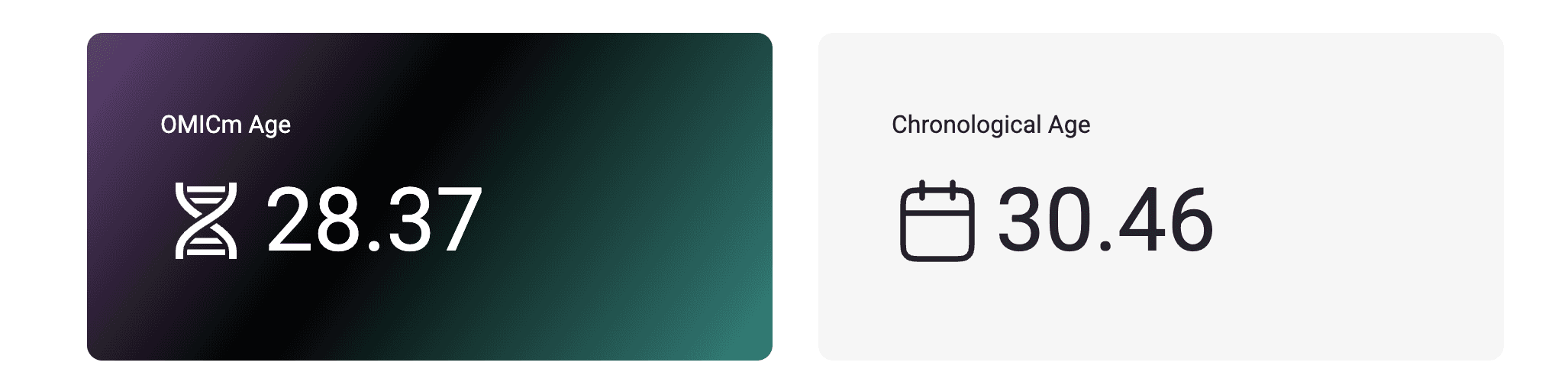
OMICm Age uses multi-”omics” dataset:
- Epigenomics: study of the complete set of epigenetic modifications across the genome of an organism.
- Transcriptomics: uses RNA sequencing to provide insights into gene expression.
- Proteomics: Protein levels to reflect the functional state of cells and tissues.
- Metabolomics: indicate metabolic health and aging-related pathways.
Then machine learning algorithms take these input features to some ground truth labels. But the question comes: what is…. the ground truth of biological age?
In some sense, biological age is an elusive relative measure. What does it mean for a 30-year-old to have a body of a 25-year-old? If everyone starts slowing down aging, wouldn’t that mean 25-year-old now have a younger age as well? The goal posts are always changing.
Perhaps it would make sense to say biological age of an average adult in 2000s or 2010s. A specific age creates a stable dataset that won’t be affected as people deploy anti-aging measures at scale.
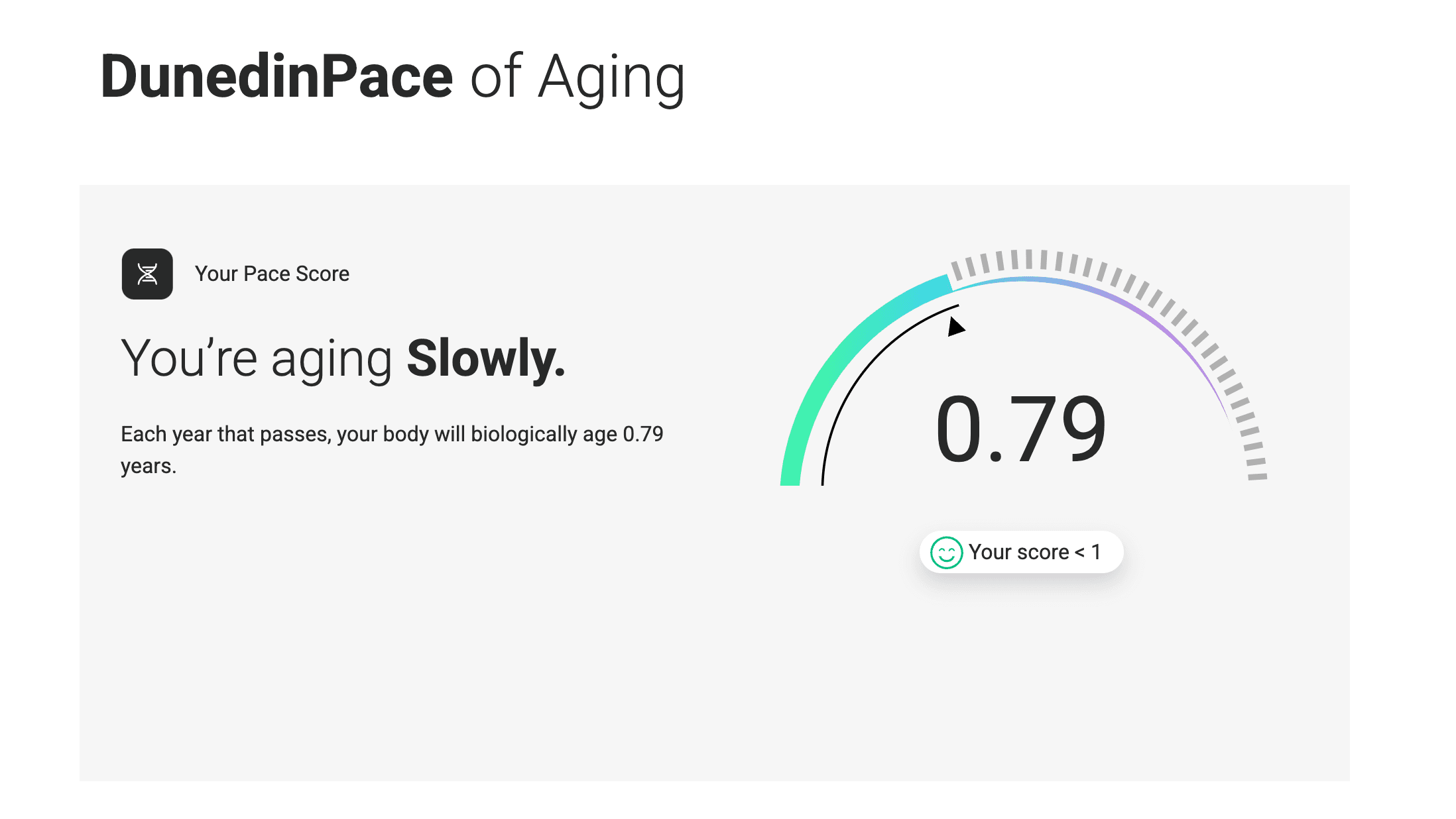
So overall age score sounds good. PACE of aging score is 0.79, means for every year (365 days), I age 365 * 0.79 = 288.35 days. BJ’s initial PACE score was 0.74, Through various BluePrint interventions over 2 years, he was able to achieve 0.64.
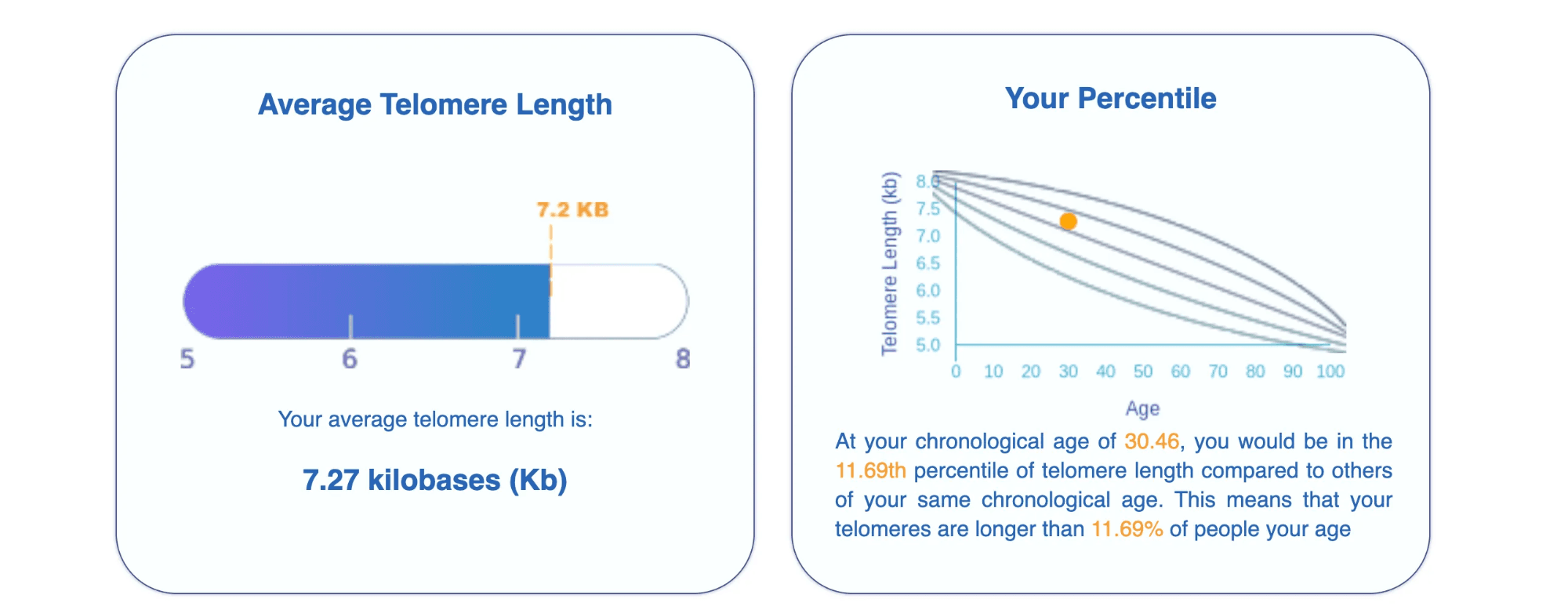
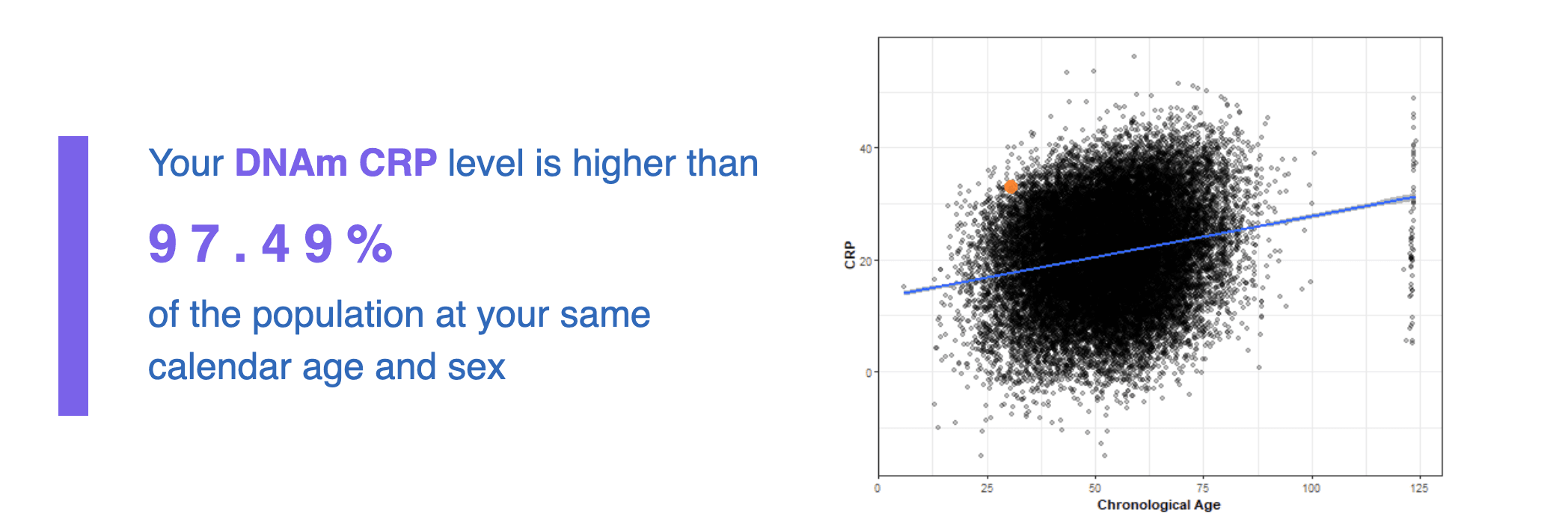
So both my telomere is shorter than average and inflammation higher than normal. Both are indicators are faster aging... but overall OMICm age is younger than chronological age. This shows that estimating biological age is a highly complicated process that is not determined by 1-2 key factors. In fact, there are other biomarkers that compensate these outliers.